
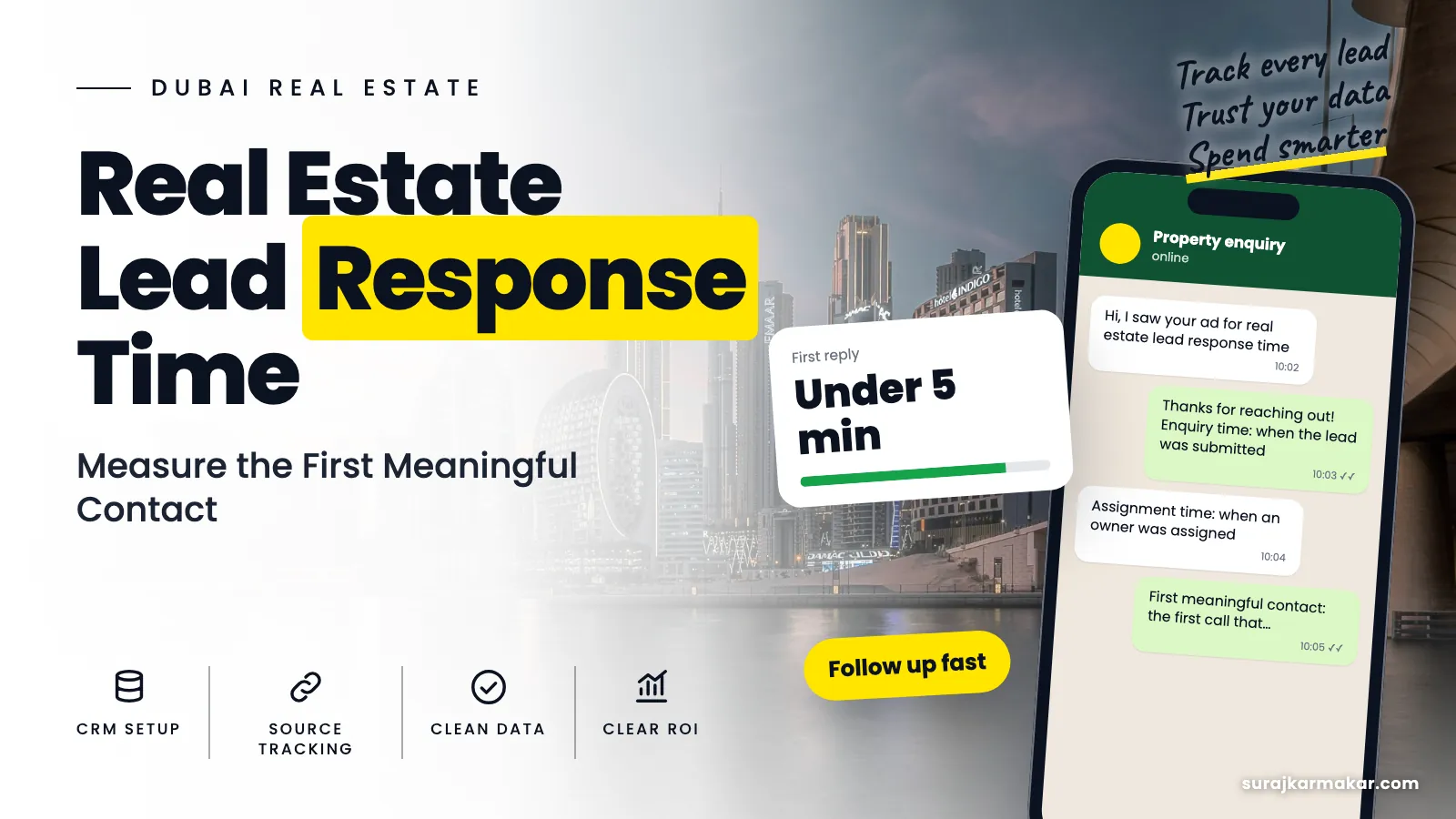
Real estate lead response time is one of the strongest drivers of conversion, and one of the least measured. Many teams think they respond fast because an auto-reply goes out instantly. But the buyer is waiting for a person. Measure the time from enquiry to the first meaningful contact, a real call or a personal message, and you will often find the delay that explains your "bad leads".
Why speed matters so much
Property buyers often enquire with several agents or developers at once. The first useful reply usually wins attention. A buyer called within minutes remembers the enquiry and is still in the mood to talk. A buyer called the next day has moved on, forgotten which ad they clicked or already booked a viewing elsewhere.
Slow response turns good leads into "not interested" leads.
What to measure
Define three timestamps:
- Enquiry time: when the lead was submitted.
- Assignment time: when an owner was assigned.
- First meaningful contact: the first call that connected, or the first personal message the buyer replied to, or at minimum the first personal attempt.
From these, measure:
- Time to assignment.
- Time to first attempt.
- Time to first meaningful contact.
Auto-replies and confirmation emails do not count as contact.

How to capture it
- Use CRM timestamps for creation and assignment.
- Log calls through CRM-integrated calling or call tracking.
- Log WhatsApp messages through an integrated WhatsApp setup.
- If manual, require advisers to log the first attempt and first connection with times.
Report response time properly
- Use median, not just average. A few very slow leads can distort the average.
- Show the share of leads contacted within your target, such as 15 minutes during working hours.
- Split by source, campaign, adviser, time of day and day of week.
- Separate working hours from out-of-hours leads.
Find the patterns
Typical findings:
- Leads arriving after 6pm wait until the next morning.
- Weekend leads wait until Monday.
- Some advisers respond in minutes, others in hours.
- High-volume campaigns overwhelm the team on launch days.
Each pattern points to a specific fix.

Link speed to outcomes
Compare contact and qualification rates by response time band: under 15 minutes, 15 to 60 minutes, 1 to 4 hours, later. In many teams, faster bands show clearly better results. Use this data to make the case for evening cover, better routing or more capacity.
Fixes that improve response time
- Automatic assignment with backup owners.
- Alerts for unassigned or untouched leads.
- An evening or weekend rota.
- A WhatsApp-first approach for new leads.
- A pre-qualification role during busy periods.
- Limiting campaign volume to what the team can handle.
More on routing in real estate lead routing.
Set realistic targets
Targets should be ambitious but achievable. If the team currently averages several hours, a five-minute target will be ignored. Set a target that is a clear improvement, measure it, celebrate progress and tighten it over time.
Make response time visible every day
A weekly report is useful, but response time problems happen hour by hour. Give sales managers a simple daily view: leads received today, leads not yet contacted, and the oldest untouched lead. A quick check at mid-morning and late afternoon catches leads before they go cold. Visibility alone often improves response times, because advisers know the numbers are being watched.
Do not trade speed for quality
Fast but careless first contact does not help. A rushed call that ignores what the buyer asked about can do more harm than a slightly later, well-prepared one. The goal is a fast and relevant first contact: the adviser knows the project, the ad and the form answers before calling.
Prepare advisers to respond well
Speed only helps if the first contact is good. Give advisers what they need before calling: the project, the ad or campaign, the form answers and any previous enquiries. A CRM view that shows this on one screen saves minutes on every lead. Short scripts or message templates for each project make fast responses consistent and relevant.
Out-of-hours leads need a plan
Many Dubai property enquiries arrive in the evening and at weekends, especially from overseas buyers. Decide how you will handle them: an evening rota, a weekend shift, or at minimum a personal WhatsApp at the start of the next working day with a specific call time. Measure response time separately for out-of-hours leads so the problem stays visible.
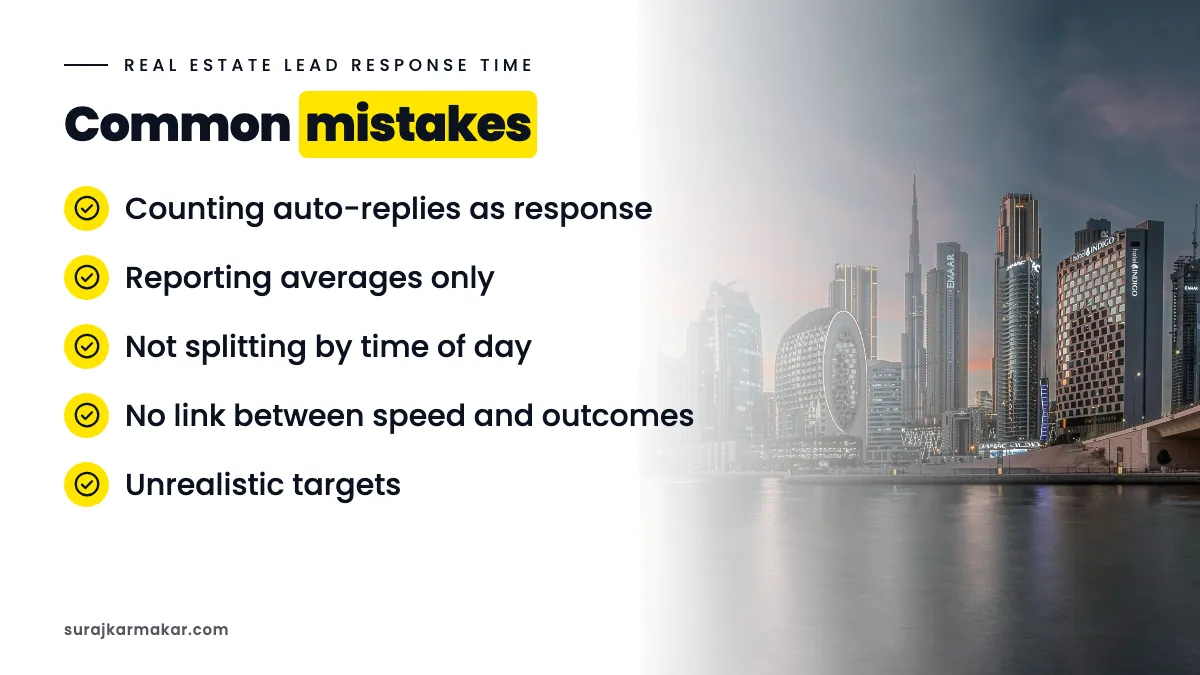
Common mistakes
- Counting auto-replies as response.
- Reporting averages only.
- Not splitting by time of day.
- No link between speed and outcomes.
- Unrealistic targets.
An illustrative example
Not a client result: a brokerage believes its response time is fast because confirmations send instantly. Measuring first meaningful contact shows many evening leads wait over 12 hours. Adding an evening rota for two advisers improves contact rates for those leads noticeably.
Frequently asked questions
What is a good lead response time for real estate?
Faster is generally better. Many teams aim for under 15 minutes during working hours. Measure your own results by response band to set the right target.
Does an automated WhatsApp message count as a response?
It helps set expectations, but it is not a meaningful contact. Measure the first personal interaction separately.
Next step
Speed is one of the cheapest ways to improve lead quality. See my approach to real estate tracking and attribution in Dubai, read about real estate leads not answering calls, or ask me to measure your response times.
Explore the wider framework: CRM and tracking for Dubai real estate.
What does this look like in your team?
If your team is working through a similar challenge, get in touch to discuss where a focused review could help.
Discuss your real estate campaign