

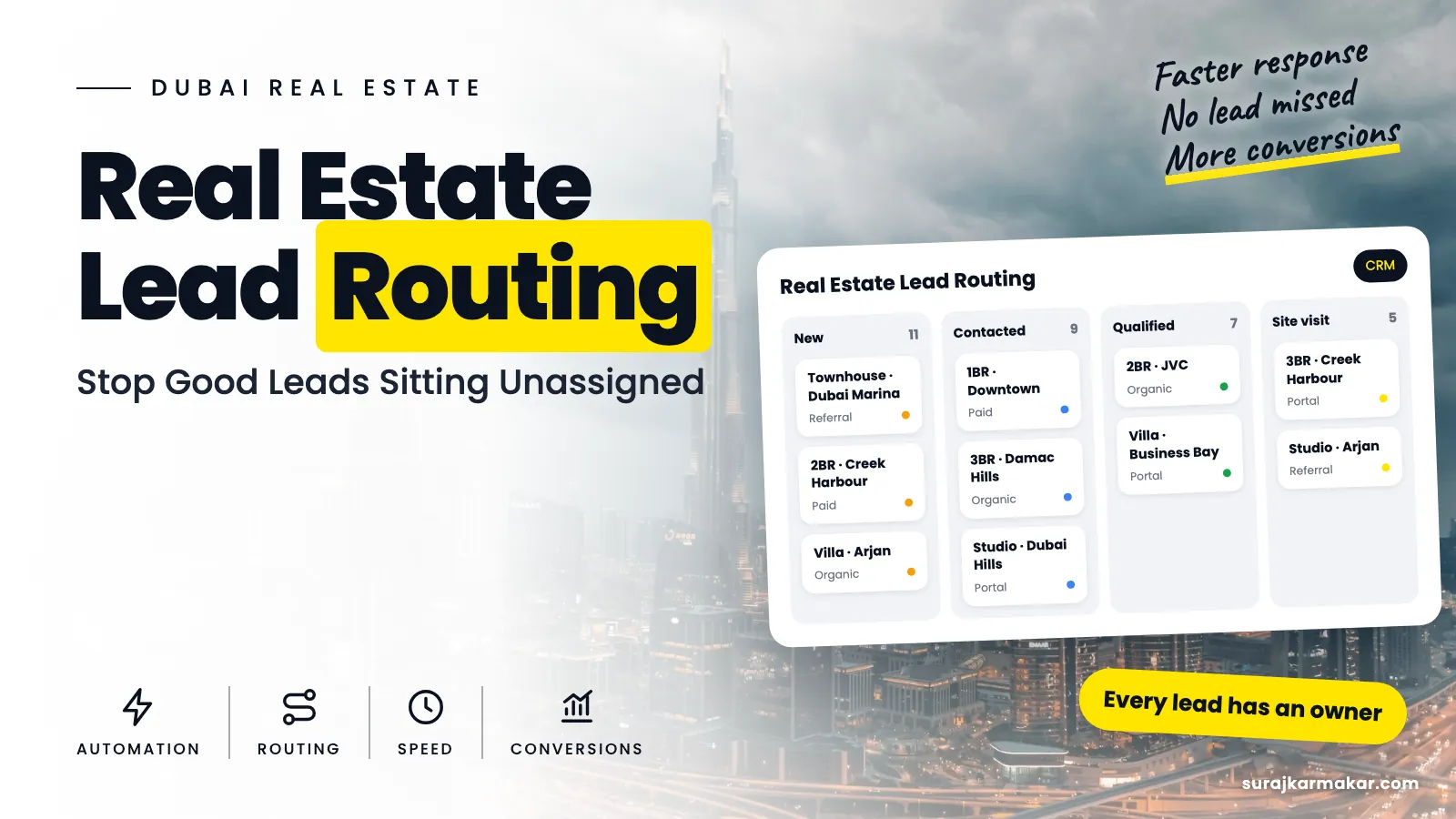
Real estate lead routing decides who calls a new enquiry and how fast. When it breaks, good buyers wait hours, get called twice, or never get called at all. You do not need a complex automation platform to fix it. You need a clear assignment rule, a backup owner, a confirmation message that sets expectations, and a daily check for leads nobody has touched. Here is how to set that up so sales trusts it.
Where property enquiries get lost
Ask any sales manager and they will have a story. A lead from a weekend campaign sat in a shared inbox until Monday. Two agents called the same buyer within ten minutes. A high-budget investor got an automated message about a different project. A lead from overseas came in at midnight and was called at 2pm the next day, after he had already booked a viewing with someone else.
None of these are marketing problems in the usual sense. The ad worked. The lead arrived. The system after the lead failed.
Map the handoff before buying tools
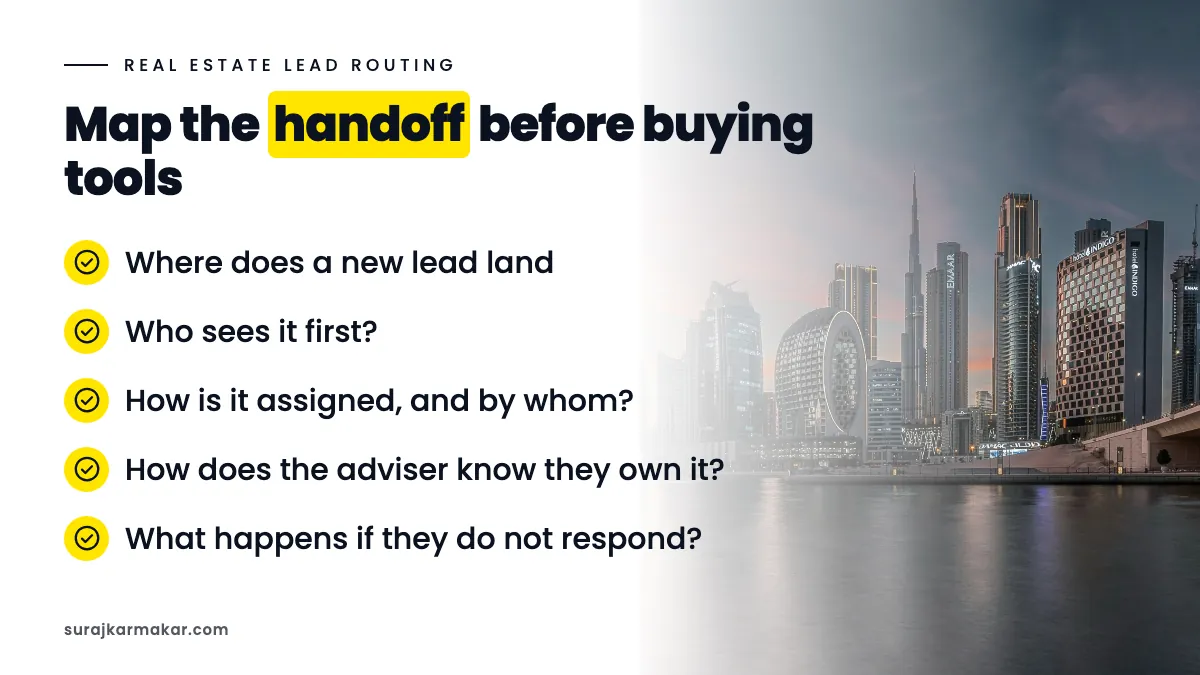
Before choosing software, write down what actually happens today:
- Where does a new lead land: CRM, email, WhatsApp, spreadsheet?
- Who sees it first?
- How is it assigned, and by whom?
- How does the adviser know they own it?
- What happens if they do not respond?
You will usually find at least one manual step that depends on one person being awake and online. That is where leads get stuck.
Build a simple routing rule
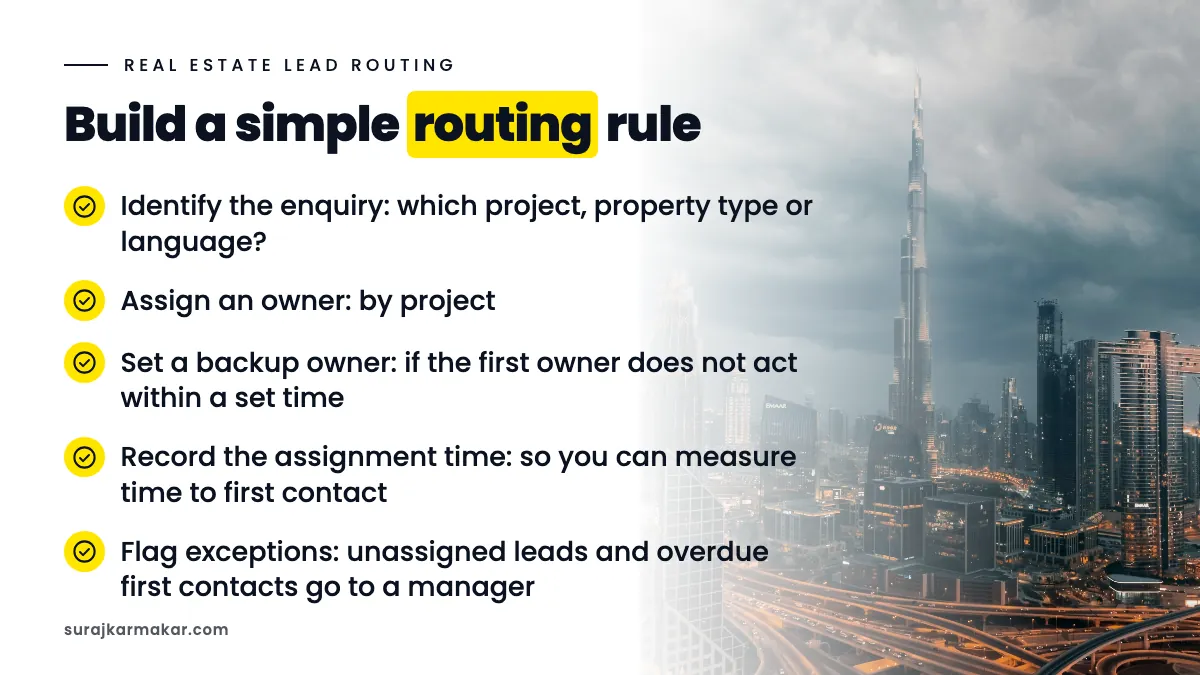
Keep the first version simple enough that every adviser can explain it:
- Identify the enquiry: which project, property type or language?
- Assign an owner: by project, by language, by round robin, or by availability.
- Set a backup owner: if the first owner does not act within a set time, the lead moves.
- Record the assignment time: so you can measure time to first contact.
- Flag exceptions: unassigned leads and overdue first contacts go to a manager.
A complicated workflow that nobody understands breaks the moment the team, the project or the working hours change. Simple rules survive.
What the confirmation message should do
An automatic message after an enquiry is useful if it is honest and specific. It should:
- Confirm you received the enquiry and name the project.
- Tell the buyer what happens next, and roughly when.
- Give a way to reach you, such as a WhatsApp number.
Do not promise "an expert will call you in 5 minutes" if your team cannot deliver. A broken promise in the first message damages trust before the first conversation. Also remember that a confirmation message is not marketing permission. Respect the consent the person gave and stop messaging when asked.
Design for the exceptions
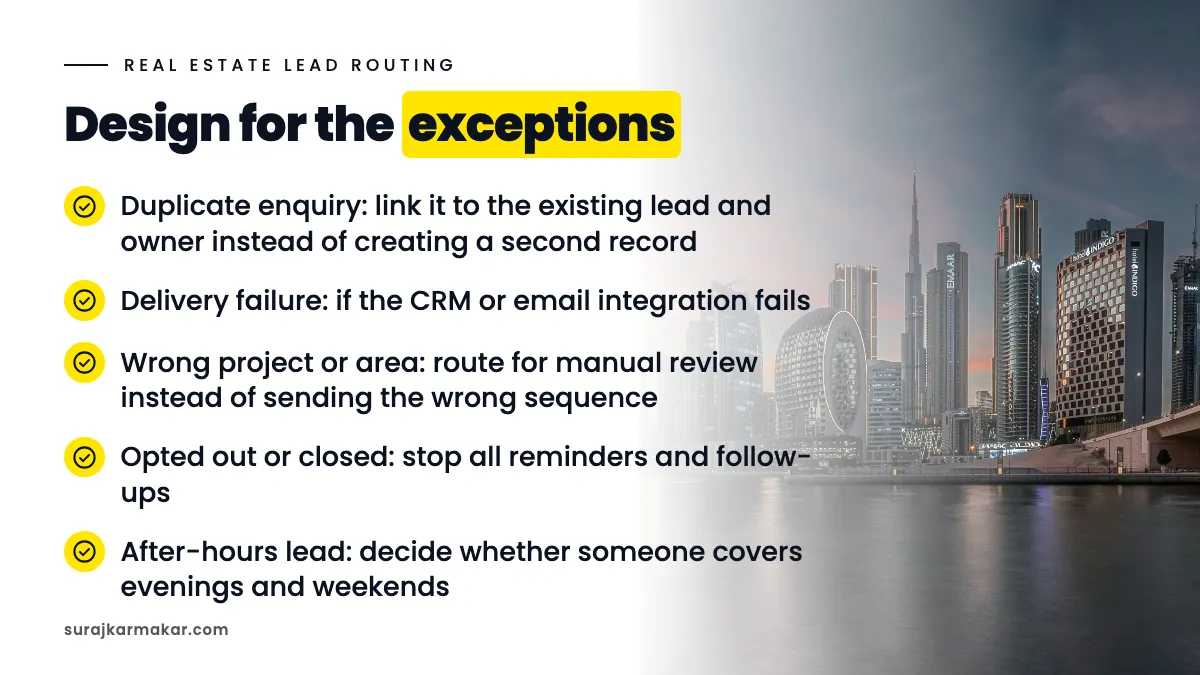
Most automation works for the normal case and fails on exceptions. Plan for these:
- Duplicate enquiry: link it to the existing lead and owner instead of creating a second record.
- Delivery failure: if the CRM or email integration fails, create a visible alert, not a silent loss.
- Wrong project or area: route for manual review instead of sending the wrong sequence.
- Opted out or closed: stop all reminders and follow-ups.
- After-hours lead: decide whether someone covers evenings and weekends, especially for overseas buyers.
Cover the hours when buyers actually enquire
Dubai property enquiries do not arrive only between 9am and 6pm. Overseas buyers in Europe, India, Russia and the UK enquire in their own evenings. Local buyers often browse late at night and on weekends. If no one is available, routing rules alone will not save the lead.
Look at when your leads actually arrive. If a large share comes in outside office hours, consider a rota, an evening shift, or at least a WhatsApp reply from a real person within a set window. Even a short, honest message, "I have your enquiry about the project and will call you at 10am Dubai time", keeps the buyer engaged and makes the next call expected rather than cold.
How to test the workflow
Before going live, and after any change:
- Submit test leads from every form and source.
- Check each one is assigned once, to the right person.
- Check the confirmation message is correct for each project.
- Leave one test lead untouched and confirm the escalation fires.
- Submit a duplicate and confirm it merges.
Repeat the test monthly. Website updates and CRM changes break integrations more often than people expect.
What to measure
Track time from enquiry to assignment, time from assignment to first contact, and the share of leads contacted within your target. Compare contact and qualification rates for leads called fast versus slow. That comparison usually makes the case for better routing on its own. For more detail, read property lead response tracking.

Frequently asked questions
Should leads go to agents by round robin or by skill?
Start with project or language, then round robin within that group. Pure round robin is fair but can send an Arabic-speaking investor to an agent who only speaks English. Skill-based routing works better once the rules are clear.
Can automation replace the first call?
No. Automation can confirm, assign and remind. The first real conversation still needs a person who understands the buyer and the project. Use automation to make that conversation happen faster, not to avoid it.
Next step
Good routing protects every dirham you spend on ads. See how I approach real estate marketing automation, read about Meta leads to WhatsApp handoffs, or talk to me about your lead workflow.
Explore the wider framework: Digital marketing for Dubai real estate.
What does this look like in your team?
If your team is working through a similar challenge, get in touch to discuss where a focused review could help.
Discuss your real estate campaign