


Real estate ROAS, or return on ad spend, sounds simple: revenue divided by ad spend. In property, the number is easy to inflate. Use property prices instead of commission, count reservations that later cancel, or credit ads for sales that came through referrals, and ROAS looks spectacular. Leaders stop trusting it. Define value carefully, match revenue to the right ad spend and time period, and ROAS becomes a useful guide for budget decisions.
Why ROAS goes wrong in real estate
In ecommerce, a sale happens online and the platform sees the revenue. In real estate:
- Sales happen offline, weeks or months after the click.
- Several channels and people influence the sale.
- Revenue means different things to developers and brokers.
- Reservations can cancel.
If you import "conversion values" without thinking, the platform may show a ROAS of 50x based on unit prices from leads that never bought.

Define value correctly
- For brokers: value is commission earned, not property price.
- For developers: value may be sales value or gross margin. Choose one and state it.
- Before sales close: you can assign estimated values to stages, such as a qualified lead or a visit, but label them as estimates, not revenue.
Match value to ad spend
ROAS = attributed revenue ÷ ad spend.
To keep it honest:
- Use ad spend only, not total marketing cost. That is ROI.
- Attribute revenue using a clear rule: first touch, last touch or shared.
- Use cohorts: ad spend in a period versus revenue from leads acquired in that period, measured later.
ROAS vs ROI
ROAS looks at ad spend only. ROI includes all marketing costs: agency fees, creative, tools and staff. ROAS is useful for comparing campaigns and channels. ROI is better for judging whether marketing as a whole pays off. Report both, clearly labelled. More on ROI in real estate marketing ROI.
Using values in ad platforms
Value-based bidding in Google and Meta can work for real estate if values reflect real outcomes:
- Assign small values to leads, larger values to qualified leads and visits, based on your conversion rates and average commission or margin.
- Import these values as offline conversions.
- Keep the values stable and realistic.
Do not import property prices as conversion values. The platform will chase high-priced leads that rarely convert, and reported ROAS will mean nothing.

Handle long sales cycles
Property sales may close months after the click. Platform attribution windows may not capture that. Options:
- Report ROAS in your own system, using CRM data, rather than relying on platform numbers.
- Use stage values for faster feedback.
- Update reports as later sales close.
Account for cancellations
If a reservation cancels, remove it from revenue. Report gross reservations and net sales separately. Otherwise ROAS stays high while the business does not see the money.
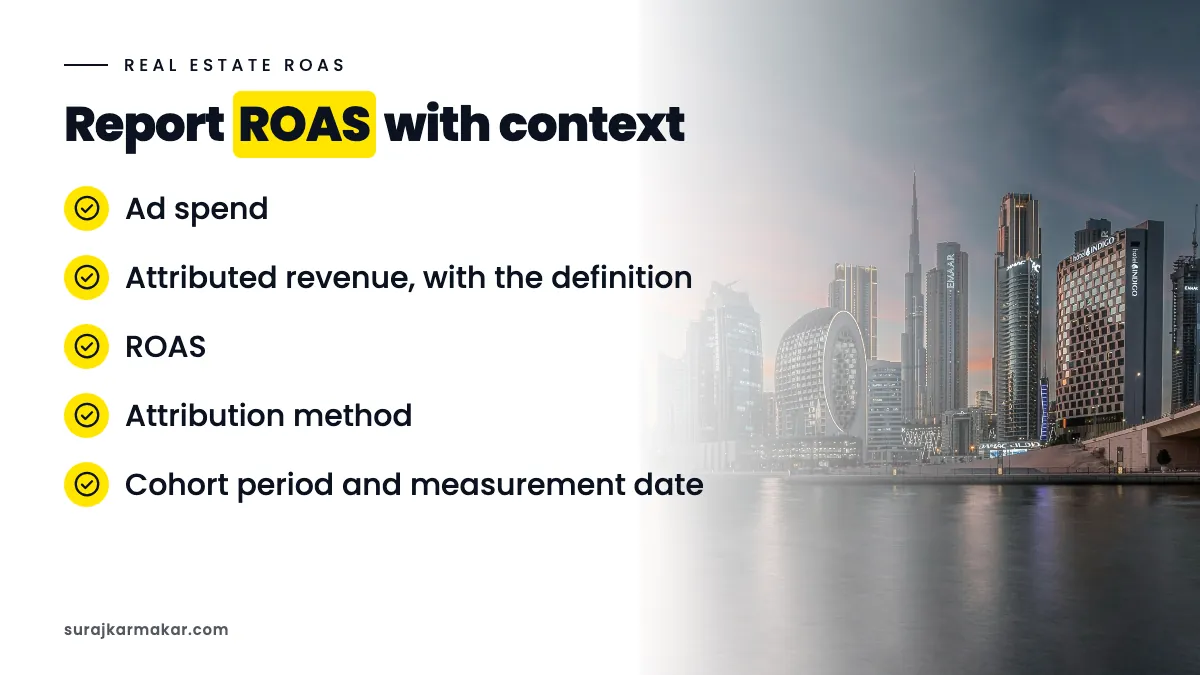
Report ROAS with context
In reports, show:
- Ad spend.
- Attributed revenue, with the definition.
- ROAS.
- Attribution method.
- Cohort period and measurement date.
- Known gaps.
A ROAS figure without context invites misunderstanding. Add a short note explaining what changed since the last report, such as new campaigns, cancelled reservations or a change in attribution method, so readers can interpret the trend correctly. If the number moved because the method changed, say so plainly.
Separate brand and non-brand campaigns
Branded search campaigns, where people search your developer or brokerage name, often show very high ROAS because those buyers already know you. Non-brand campaigns, which reach new buyers, show lower ROAS but create new demand. Report them separately. If you combine them, branded results can hide weak non-brand campaigns, or make it look like all search is equally profitable.
Common ROAS mistakes
- Using property price as revenue for brokers.
- Importing unit prices as conversion values.
- Comparing this month's spend with this month's sales.
- Ignoring cancellations.
- Mixing ROAS and ROI.
When ROAS is not the right metric
For many property campaigns, especially new launches or small accounts, there are too few sales to calculate reliable ROAS by campaign. In those cases, cost per qualified lead and cost per visit are more useful day-to-day metrics. Use ROAS at a higher level, such as by channel over a quarter, where there are enough sales to make it meaningful. Forcing ROAS onto every small campaign produces noisy numbers that lead to poor decisions.
Build trust with finance
Finance teams often question marketing ROAS because the definitions are unclear. Agree definitions with finance: what counts as revenue, when it is recognised, how cancellations are handled. Use the same numbers finance uses for sales. When marketing and finance report the same revenue figure, ROAS discussions become far more productive.
An illustrative example
Not a client result: a broker's Google Ads shows a very high ROAS because conversion values were set to property prices. After switching to estimated commission values per stage and reporting net sales from the CRM, ROAS is much lower but credible, and budget decisions start using it.
Frequently asked questions
What is a good ROAS for real estate ads?
It depends on commission or margin and on all other costs. Use ROAS to compare your own campaigns and channels, and ROI to judge overall profitability.
Should I use value-based bidding for property campaigns?
It can help if you have enough conversions and realistic values. Start with stage values based on your data and monitor quality closely.
Next step
The right value definition makes ROAS useful. See my Dubai real estate performance marketing framework, read about Google Ads offline conversions, or ask me to review your ROAS reporting.
Explore the wider framework: Real estate lead generation Dubai.
What does this look like in your team?
If your team is working through a similar challenge, get in touch to discuss where a focused review could help.
Discuss your real estate campaign