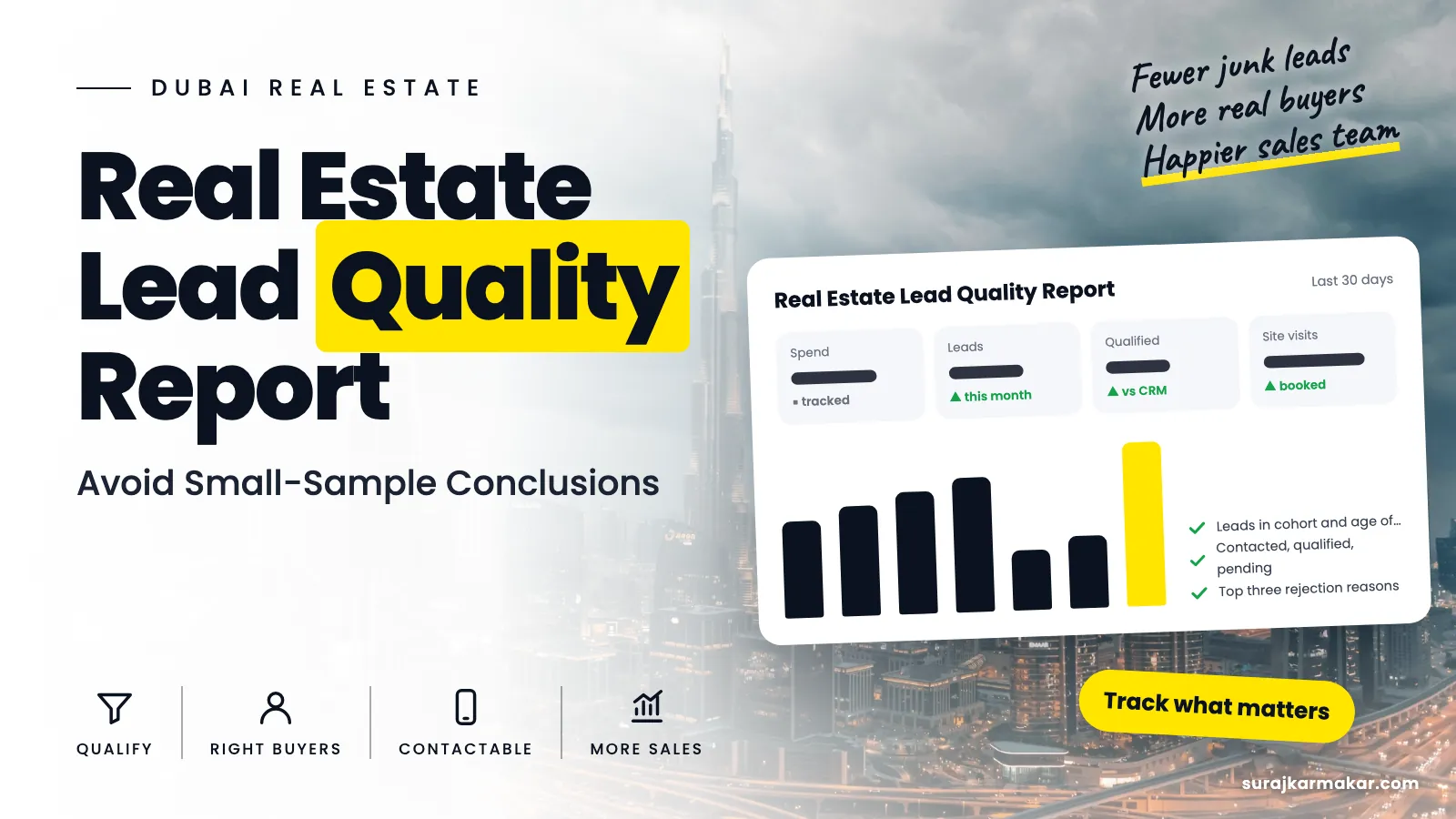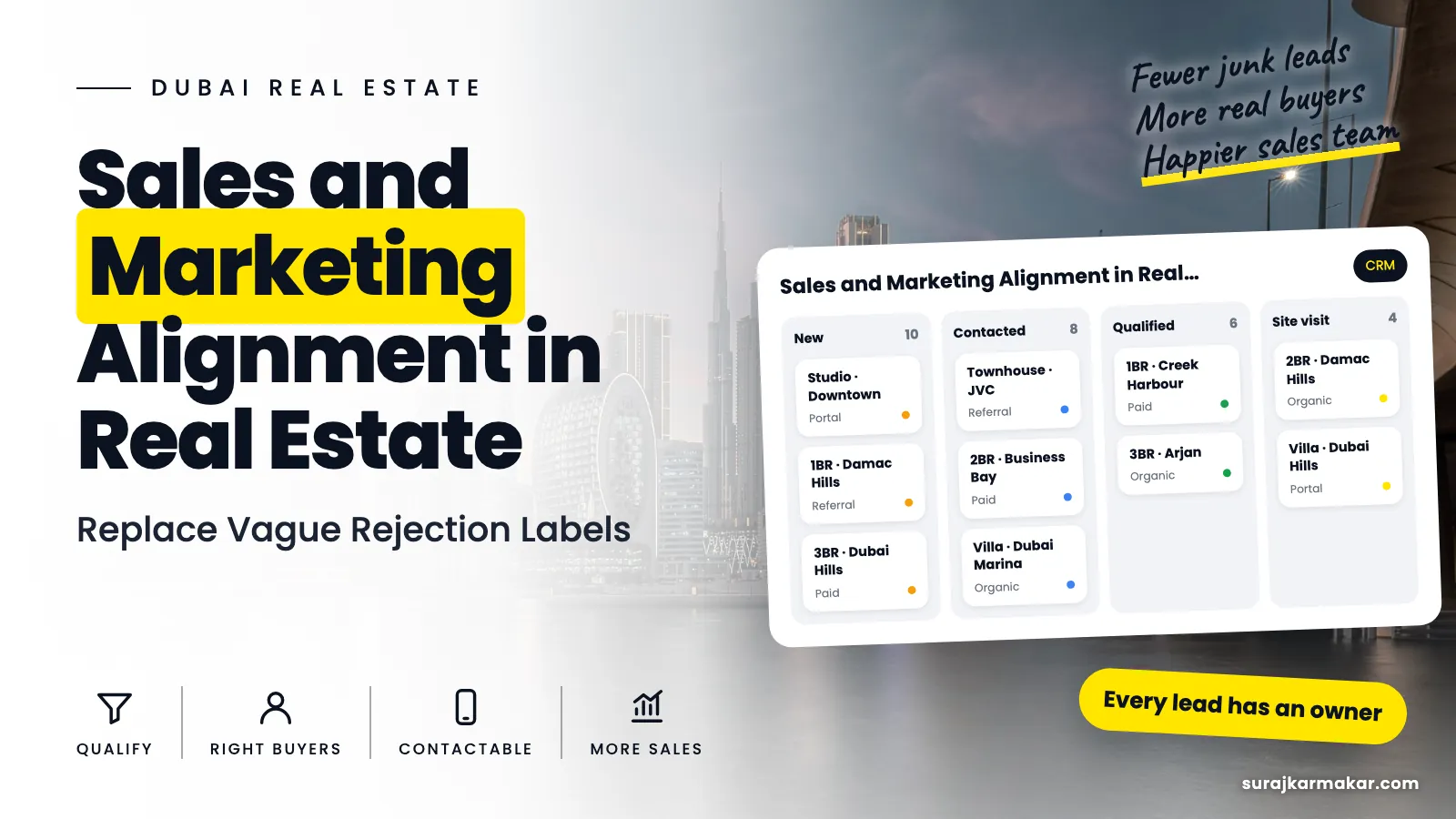

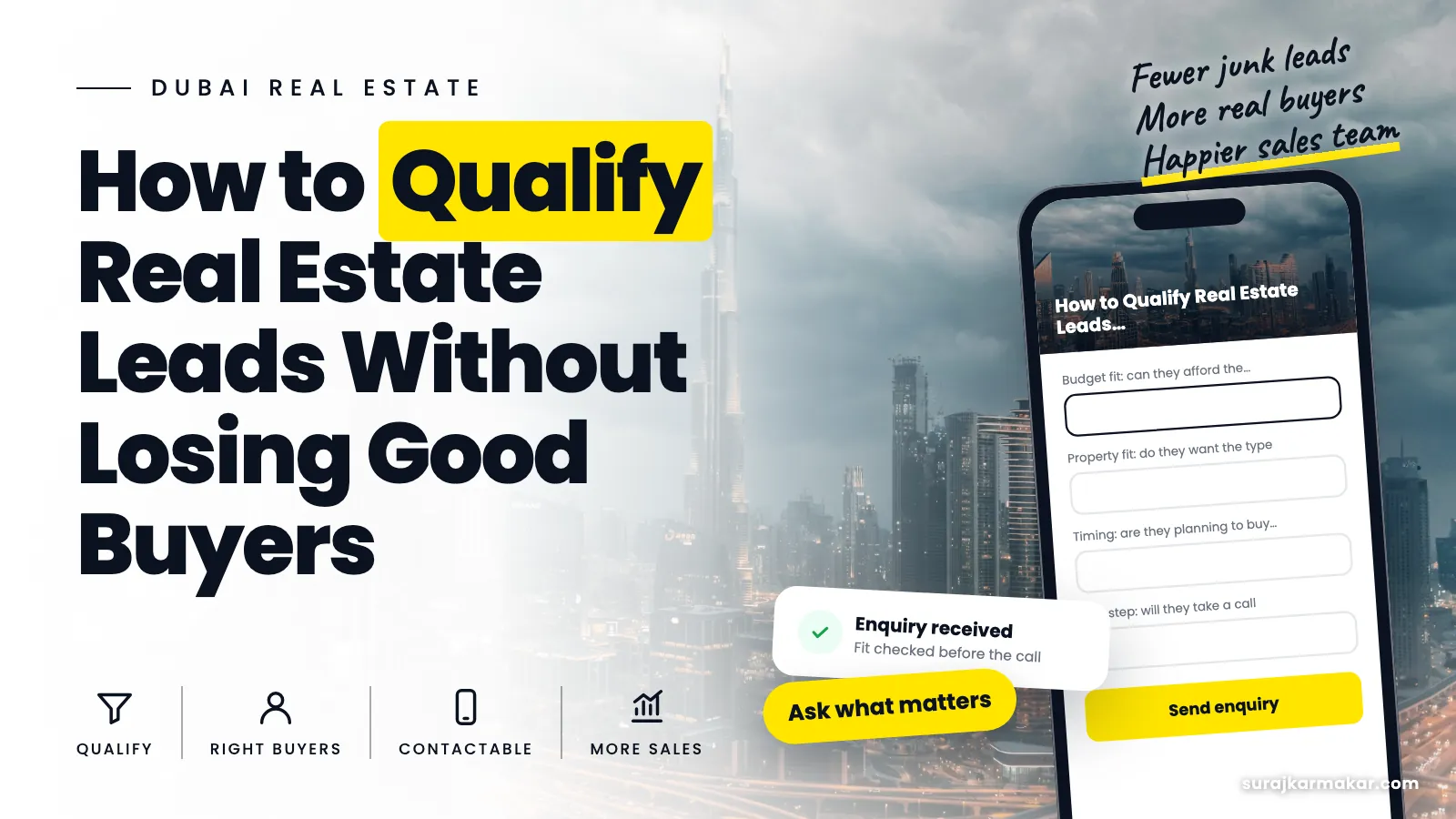
If you want to know how to qualify real estate leads properly, start here: you need a written definition that sales and marketing both use, and five separate outcomes instead of "good" and "bad". Most teams call every failed lead "junk". That hides the real problem. A wrong number, a buyer with the wrong budget and a buyer who is ready next year all need different fixes. Here is a simple system that works for developers, brokerages and individual agents.
The cost of a vague definition
When qualification is vague, three things happen. First, each adviser judges leads differently, so your quality numbers are meaningless. Second, marketing cannot tell which campaigns work, because the feedback is inconsistent. Third, good future buyers get thrown away because they are not ready this month.
The result is wasted budget and wasted leads. You paid to acquire them. Losing them to a bad label is the most expensive mistake in the funnel.
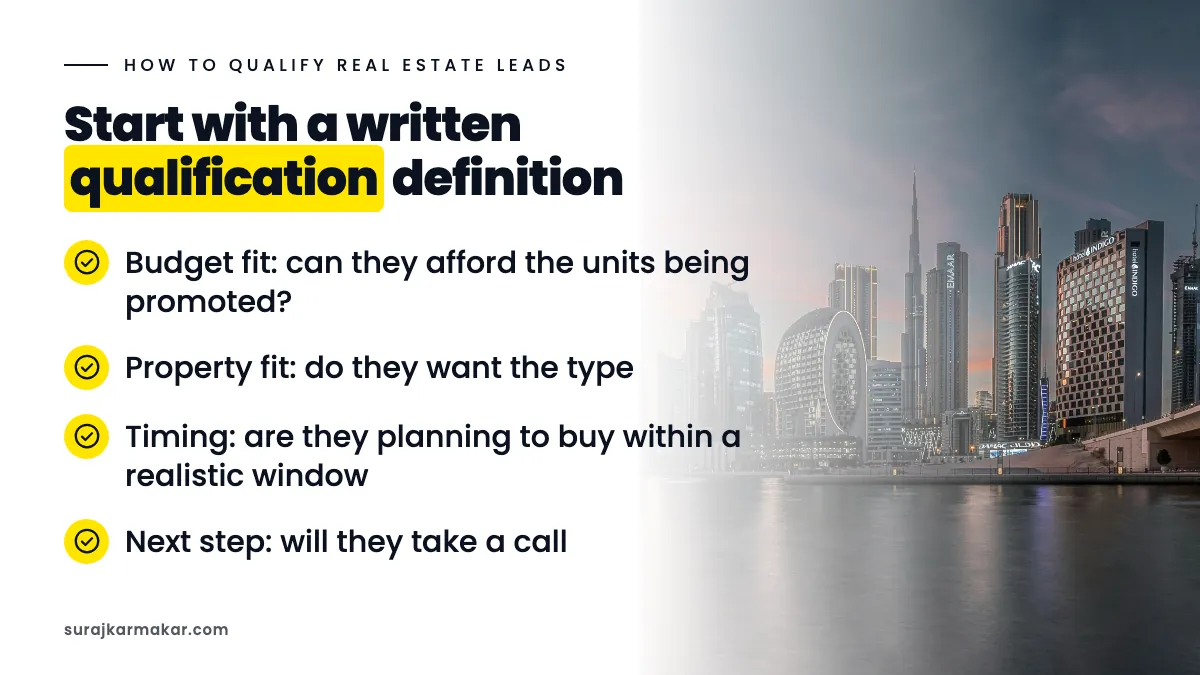
Start with a written qualification definition
A qualified lead is an enquiry that meets criteria the business agreed in advance. For most residential property, the criteria include:
- Budget fit: can they afford the units being promoted?
- Property fit: do they want the type, size and area you offer, or a close alternative?
- Timing: are they planning to buy within a realistic window, often six to twelve months?
- Next step: will they take a call, meeting, video tour or site visit?
Write this down for each project. Review it with the sales manager before the campaign starts. If a different project has a different price point, it needs a different definition.
Use five outcomes, not two
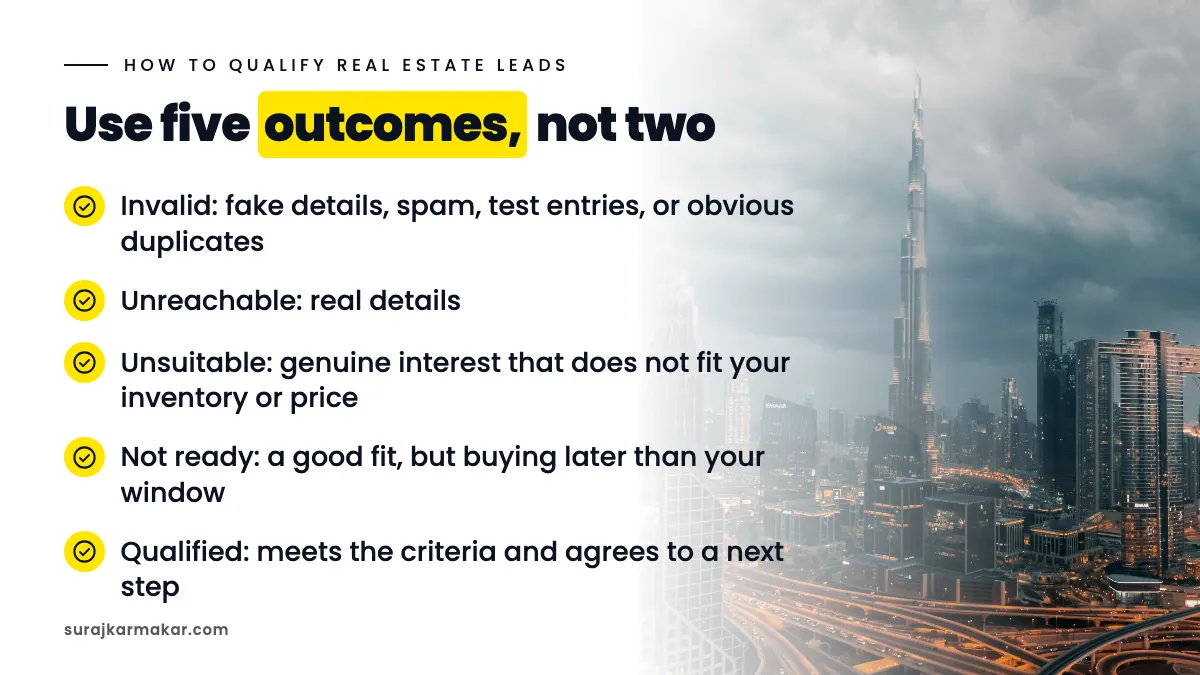
Replace "good" and "bad" with these five:
- Invalid: fake details, spam, test entries, or obvious duplicates.
- Unreachable: real details, but no response after your agreed number of attempts.
- Unsuitable: genuine interest that does not fit your inventory or price.
- Not ready: a good fit, but buying later than your window.
- Qualified: meets the criteria and agrees to a next step.
Each outcome points to a different action. Invalid leads point to form and fraud settings. Unreachable leads point to follow-up speed or contact method. Unsuitable leads point to the ad message or targeting. Not-ready leads need nurturing, not rejection. Qualified leads need fast handover to the right adviser.
Questions that qualify without scaring buyers off
You can ask most qualifying questions in the first two minutes of a call:
- "Is this for your own use or an investment?"
- "Which areas are you considering?"
- "What budget range are you working with?"
- "When are you hoping to buy?"
- "Would a video call or a site visit be more useful next?"
Ask them naturally. The goal is to help, not interrogate. If the buyer does not fit this project but fits another, route them. That is a qualified lead for the business, even if not for this campaign. For a fuller list, see my guide to real estate lead qualification questions.
The metrics that follow from good qualification
Once outcomes are clear, three metrics become useful:
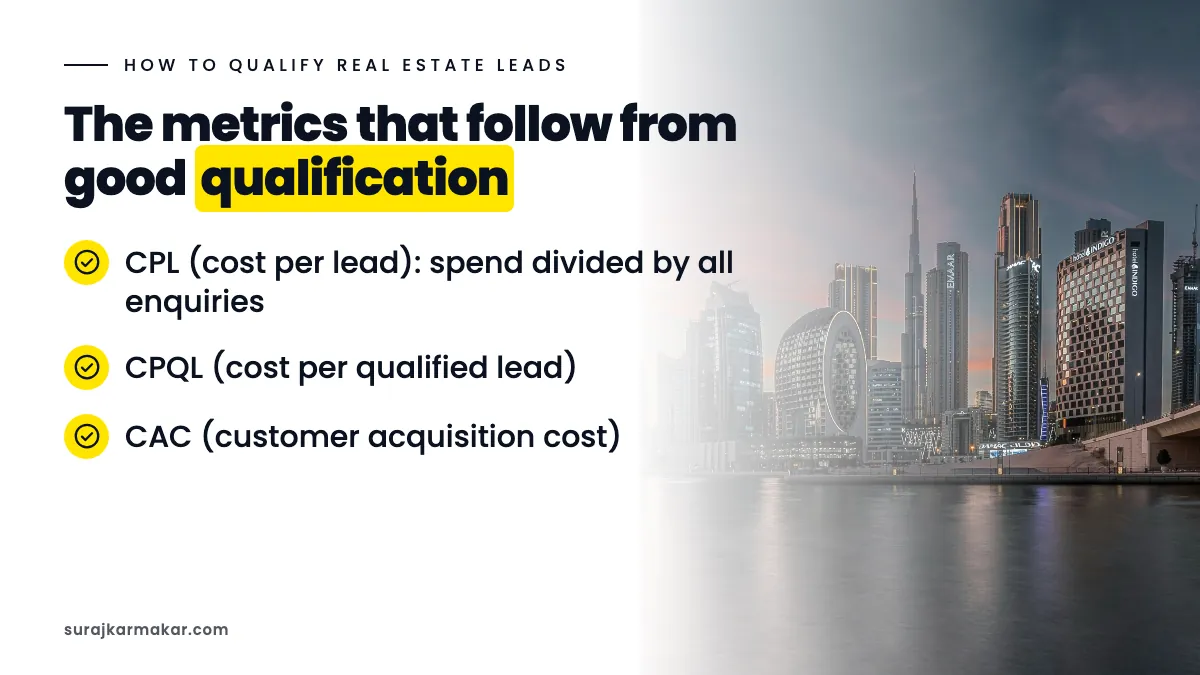
- CPL (cost per lead): spend divided by all enquiries. A fast signal, not a scorecard.
- CPQL (cost per qualified lead): spend divided by qualified enquiries. Your main campaign comparison.
- CAC (customer acquisition cost): acquisition costs divided by buyers who actually purchased. Always say whether it includes only media or sales costs too.
Keep the time period and lead group the same when comparing. A campaign that started yesterday cannot be judged against one with a month of follow-up.
Why cheaper leads can cost more
Illustrative example: one campaign spends AED 10,000 and gets 100 enquiries. Another spends AED 10,000 and gets 50. If both produce 10 qualified enquiries, both have the same AED 1,000 CPQL. But the first campaign made sales handle twice as many calls to find them. The "cheaper" campaign cost more in sales time.
That hidden cost matters. Sales capacity is limited. Time spent on poor leads is time not spent on good ones.
What to do with not-ready buyers
Not-ready buyers are the most wasted group in most CRMs. They had a real interest, the right budget and the right area. They just are not buying this quarter. Too often they get marked "not interested" and never contacted again.
Put them on a simple nurture plan instead. Send useful updates every few weeks: new launches in their area, price changes, payment plan offers, handover news. Ask once a quarter whether their timing has changed. When it does, they come back to you warm instead of to a competitor cold. Track how many not-ready leads later become qualified. That number shows the real value of the campaign that first brought them in.
Common qualification mistakes
- Marking unreached leads as "not interested".
- Rejecting not-ready buyers instead of nurturing them.
- Using a different definition for each adviser.
- Changing the definition mid-campaign without noting it.
- Qualifying only on budget and ignoring timing and intent.
Frequently asked questions
How many contact attempts before a lead is unreachable?
Agree a fixed rule, for example four attempts across two days using both call and WhatsApp. The exact number matters less than everyone using the same rule, so your unreachable rate is comparable across campaigns.
Should marketing or sales qualify leads?
Sales qualifies, because they have the conversation. Marketing designs the criteria with sales and analyses the results. Some teams add a pre-qualification step through the form or an inside sales role, which can help when lead volume is high.
Next step
Clear qualification is the foundation of everything else. See my approach to real estate lead generation, learn how lead scoring for Dubai real estate builds on it, or talk to me about your qualification rules.
Explore the wider framework: Real estate lead generation Dubai.
What does this look like in your team?
If your team is working through a similar challenge, get in touch to discuss where a focused review could help.
Discuss your real estate campaign