
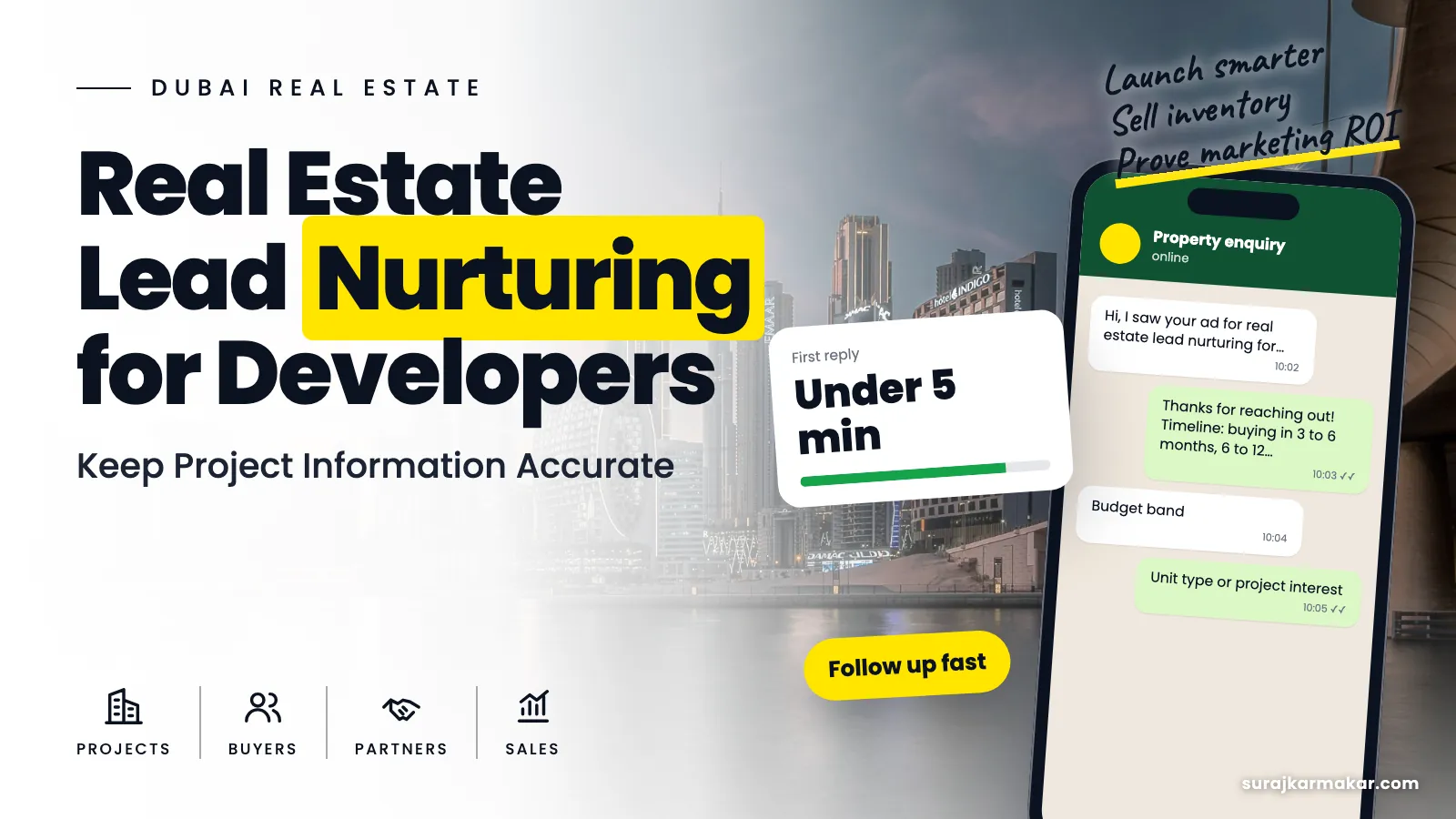
Real estate lead nurturing is how developers recover the value of leads that were not ready to buy. Most enquiries do not convert in the first month. Some are waiting for a bonus, a property sale or a visit to Dubai. Others want a different unit that is not available yet. If you drop them, someone else sells to them later. Nurture them with accurate, useful updates, and a meaningful share will come back warm.
The waste in most CRMs
Look at any developer CRM and you will find thousands of leads marked "not interested", "later" or "follow up". Most will never be contacted again. Each one cost money to acquire. Many were genuine. They just were not ready when the adviser called.
At the same time, the marketing team is paying for new leads every day. Nurturing the existing database is often far cheaper than buying more.
Segment before you nurture
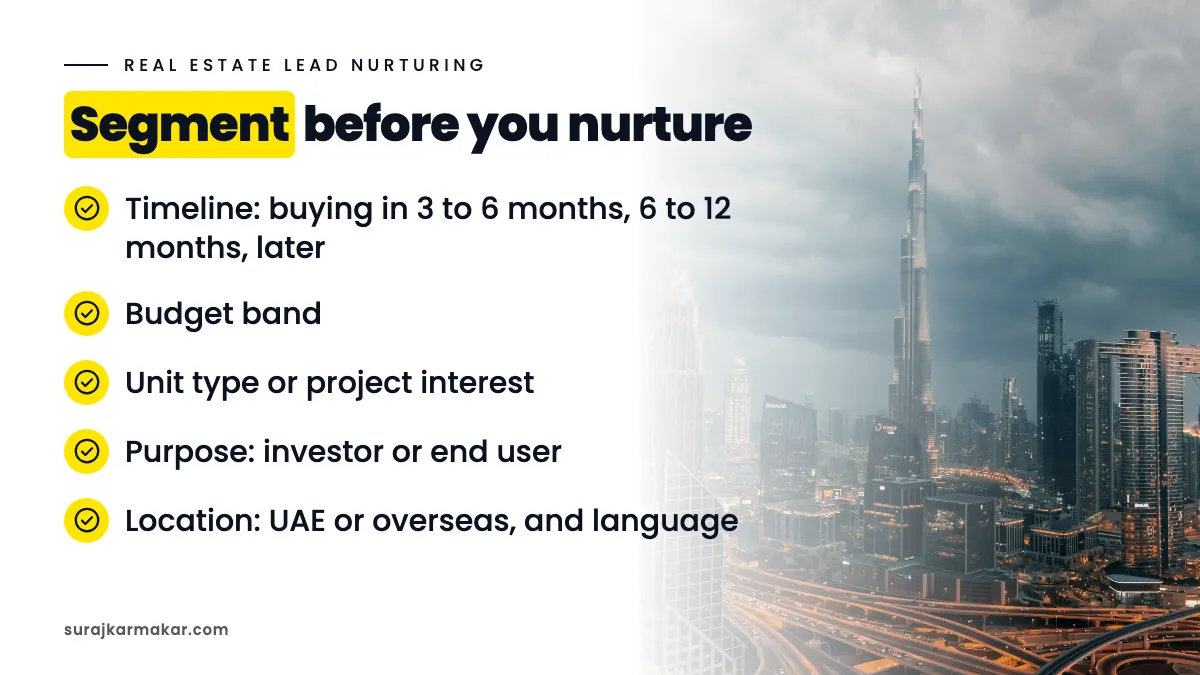
Do not send the same message to everyone. Segment by:
- Timeline: buying in 3 to 6 months, 6 to 12 months, later.
- Budget band.
- Unit type or project interest.
- Purpose: investor or end user.
- Location: UAE or overseas, and language.
Even three or four segments make messages far more relevant.
What to send
Useful nurture content for developer leads:
- New phase or new project launches in their budget and area.
- Updated payment plans or launch offers, accurately described.
- Construction progress updates with real photos.
- Handover news.
- Short guides: how off-plan buying works, fees, buying from abroad.
- Event invitations: open houses, roadshows, webinars.
Every message should be accurate. Outdated prices or availability destroy trust fast.
How often
Every two to four weeks is a reasonable starting point for most segments. More frequent messages work for hot segments close to buying; less frequent for long-term ones. Watch unsubscribe and complaint rates.
Which channels
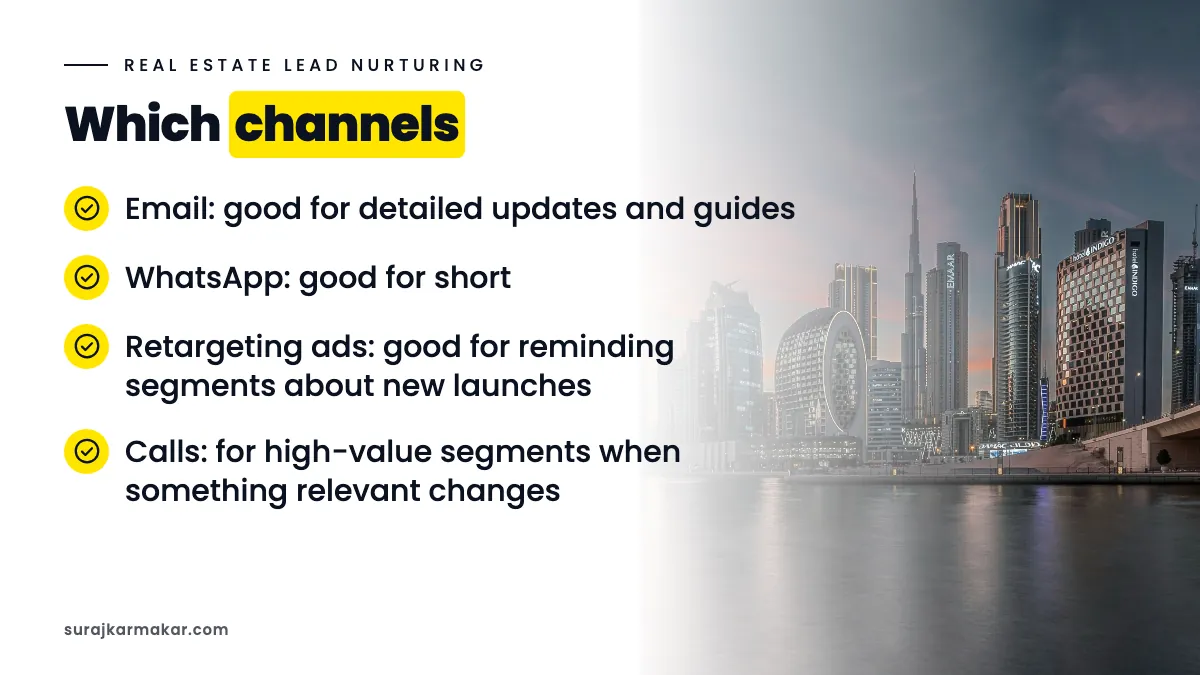
- Email: good for detailed updates and guides.
- WhatsApp: good for short, timely updates, but only with clear consent and respect for opt-outs.
- Retargeting ads: good for reminding segments about new launches, using CRM-based custom audiences.
- Calls: for high-value segments when something relevant changes.
Keep project information accurate
Nurture campaigns often run for months. Information changes: prices rise, units sell, payment plans change, handover dates move. Assign someone to review all nurture content monthly against the current price list and project status. One outdated message can cause more harm than ten good ones.
Respect consent and rules
Only send marketing messages to people who have agreed, under your privacy policy and applicable rules. Make it easy to opt out. Honour opt-outs immediately across all channels. Keep records of consent.
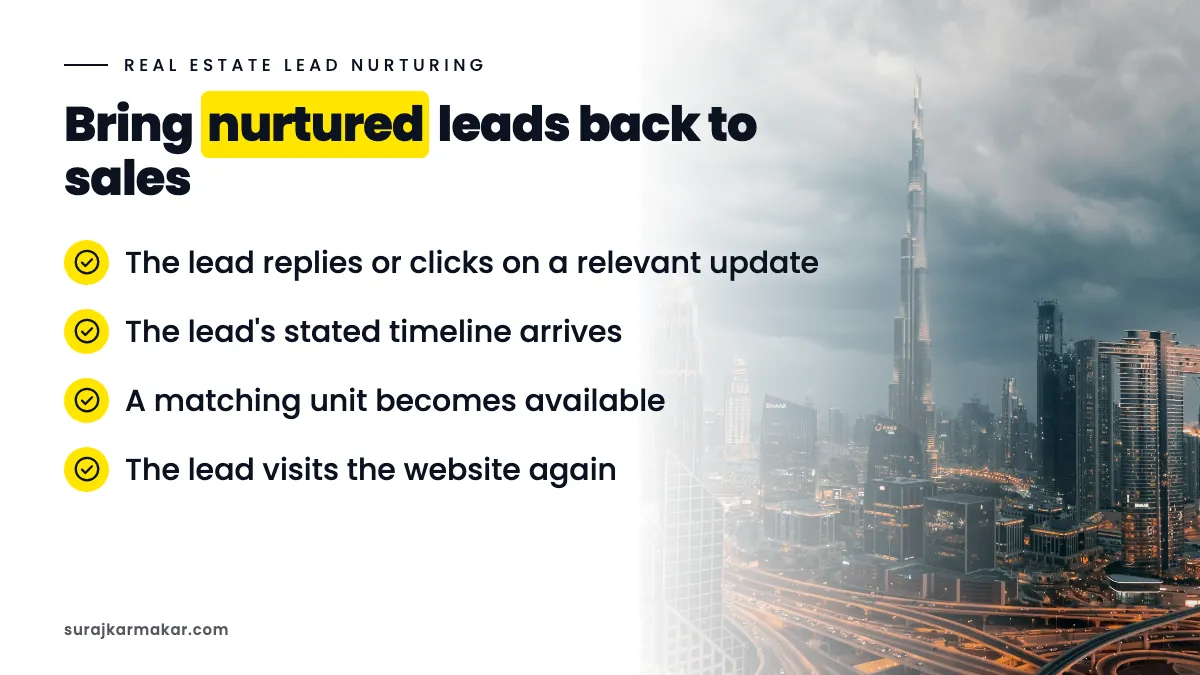
Bring nurtured leads back to sales
Define triggers for re-contact:
- The lead replies or clicks on a relevant update.
- The lead's stated timeline arrives.
- A matching unit becomes available.
- The lead visits the website again.
When a trigger fires, the lead goes back to an adviser with the context: what they enquired about, what they have engaged with, and why now.
Write messages people want to read
Nurture fails when every message is a sales push. Mix the content. For every message that asks for a call, send two that simply help: a construction update, a short guide to service charges, or a clear explanation of how a payment plan works. Keep messages short and specific. Use the buyer's name and their project of interest. A message that feels personal and useful gets opened; a generic blast gets ignored or reported as spam.
Coordinate nurture with sales
Advisers should know which nurture messages their leads are receiving. Nothing feels worse to a buyer than receiving an automated "new launch" email the day after an adviser told them about it personally. Show nurture activity in the CRM record. Pause automated messages when an adviser is actively in conversation with the lead, and resume them if the conversation goes quiet.
Measure nurture results
Track:
- Leads re-engaged from nurture.
- Qualified leads and visits from nurture.
- Reservations from previously "not ready" leads.
- Unsubscribe rates.
Compare cost per qualified lead from nurture with paid channels. Usually it is much lower.
Start with your best segments
If your database is large and messy, do not try to nurture everyone at once. Start with the segments most likely to buy: leads with a budget that matches current inventory and a timeline within the next year. Clean their records, check consent and build a simple sequence. Once it works, extend to the next segment. Quick wins build the case for investing in the rest.

Common nurture mistakes
- No segmentation.
- Outdated prices and availability.
- Messaging people without consent.
- Too many messages, too fast.
- No process to bring re-engaged leads back to sales.
An illustrative example
Not a client result: a developer has a large database of past enquiries. They segment by budget and timeline and send a monthly update about new phases. Over time, a steady stream of past enquirers replies to updates, and these leads book visits at a higher rate than new paid leads.
Frequently asked questions
How long should I nurture a real estate lead?
As long as they remain engaged and have consented. Some buyers take a year or more. Reduce frequency for long-term leads rather than stopping entirely.
Should nurture be automated?
Automate delivery and triggers, but keep content reviewed and relevant. Human follow-up should take over as soon as a lead shows renewed interest.
Next step
Your database is often your cheapest lead source. See my approach to real estate marketing automation, read about real estate lead routing, or talk to me about your nurture plan.
Explore the wider framework: Marketing for Dubai developers.
What does this look like in your team?
If your team is working through a similar challenge, get in touch to discuss where a focused review could help.
Discuss your real estate campaign