
The right Google Ads campaign structure for real estate depends on how your buyers search. Some search for a project by name. Others search for a community and a property type. Mixing both in one campaign blurs your data and wastes budget. Run project campaigns for known launches and community campaigns for buyers who know the area but not the building. Keep them separate, stop them competing, and you will know exactly where your qualified leads come from.
The problem with one big campaign
A common setup is one campaign called "Dubai Property" with every project, community and generic term inside. It is easy to launch and hard to manage. Budget flows to whatever gets the most clicks, usually generic terms. Project searches compete with generic searches for the same budget. Reports show an average that hides which part works.
When a developer asks which project generated the most qualified leads, nobody can answer properly.
When to run project campaigns
Project campaigns target searches for a specific development: its name, developer plus name, or name plus "price", "floor plan" or "payment plan".
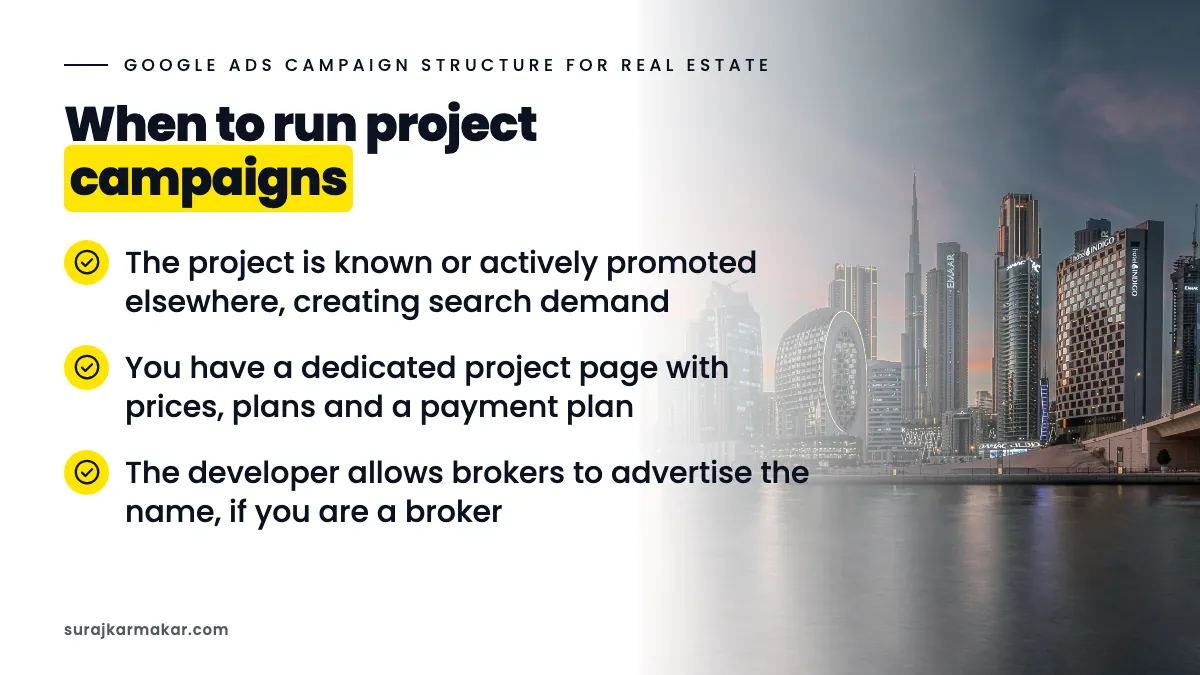
Project campaigns work best when:
- The project is known or actively promoted elsewhere, creating search demand.
- You have a dedicated project page with prices, plans and a payment plan.
- The developer allows brokers to advertise the name, if you are a broker.
Project searchers usually have high intent. They already know what they want. Your job is to show up, match the search exactly and make enquiry easy.
When to run community campaigns
Community campaigns target searches like "apartments for sale Dubai Creek Harbour" or "villa JVC buy". The buyer knows the area but not necessarily the project.
Community campaigns work best when:
- You have several projects or listings in the same area.
- The community has steady search demand.
- You can show options, prices and a short area guide on the page.
Community searchers often compare projects. Give them a choice and help them shortlist.
How to keep the two from competing
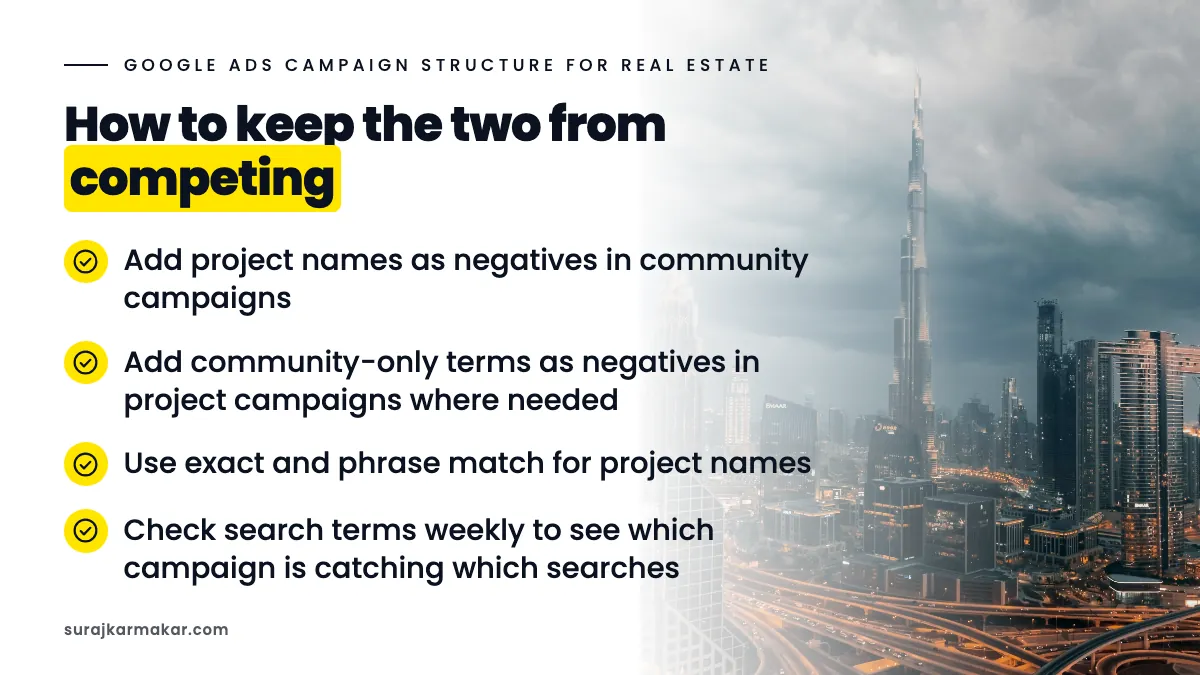
If both campaigns run, a search like "[project name] Dubai Hills" could trigger either. To keep data clean:
- Add project names as negatives in community campaigns.
- Add community-only terms as negatives in project campaigns where needed.
- Use exact and phrase match for project names.
- Check search terms weekly to see which campaign is catching which searches.
This way each search goes to the most relevant ad and page.
Structure inside each campaign
Project campaign
- Ad group: project name
- Ad group: project name plus price or payment plan
- Ad group: developer plus project
- Landing page: dedicated project page
Community campaign
- Ad group per property type: apartments, villas, townhouses
- Ad group per buyer type if relevant: off-plan, ready
- Landing page: community page with listings or projects filtered by type
Budget split
Do not split budgets evenly by default. Look at search volume and qualified lead history. A project with strong demand and a clear page may deserve most of the budget during launch. Community campaigns may provide steadier volume over time. Review every two weeks and shift budget toward the campaign with the better cost per qualified lead.
How structure helps sales and developers
Clear structure is not only a marketing benefit. When each project and community has its own campaign, the sales team can see exactly which project a lead asked about, and the first call can start with the right brochure and prices. Developers get a clean view of demand by project, which helps with launch timing and pricing.
It also makes budget conversations easier. Instead of defending one big number, you can show that one project produces qualified leads at half the cost of another, and agree where to move money.

Ad copy and extensions per campaign
Write ads that suit each campaign type. Project ads should use the project name in the headline and state one fact buyers care about, such as payment plan or handover. Community ads should name the area and property type, and mention choice: "Ready and off-plan villas in Dubai Hills". Use sitelinks to send buyers to floor plans, payment plans or specific unit types. Keep the details accurate and update them when prices or availability change.
What about generic campaigns?
Generic terms like "buy apartment in Dubai" can still work, but give them their own campaign with a lower budget and strict negatives. They bring more research-stage buyers. Judge them separately so they do not drag down the averages of your stronger campaigns.
What to report
Report each campaign separately: spend, leads, qualified leads, cost per qualified lead and visits. Developers and sales managers can then see which projects and communities attract real demand, which helps with inventory and pricing decisions as well as marketing.
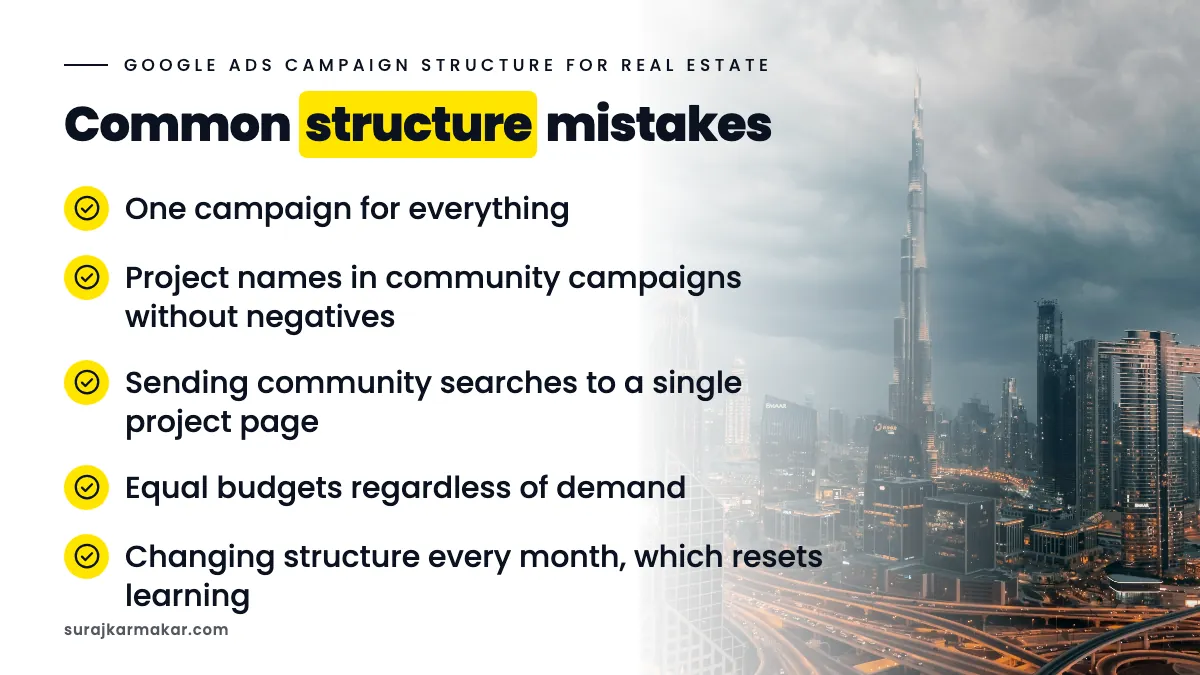
Common structure mistakes
- One campaign for everything.
- Project names in community campaigns without negatives.
- Sending community searches to a single project page.
- Equal budgets regardless of demand.
- Changing structure every month, which resets learning.
Frequently asked questions
Can brokers advertise developer project names on Google?
It depends on trademark rules and agreements with the developer. Check before bidding on project names, and never imply you are the developer if you are not.
Should each project have its own campaign?
For major projects with real search demand, yes. For small projects with little volume, group them into a community campaign with separate ad groups instead.
Next step
Clean structure gives clean decisions. See how I run Google Ads for Dubai real estate, read about scaling search campaigns without losing visibility, or send me your account structure.
Explore the wider framework: Google Ads for Dubai real estate.
What does this look like in your team?
If your team is working through a similar challenge, get in touch to discuss where a focused review could help.
Discuss your real estate campaign