


Real estate lead feedback is only useful if it tells marketing what to change. "Not interested" does not. It can mean the number was wrong, the buyer wanted a different area, the budget was too low, or nobody called for two days. Replace that one label with five or six clear reasons, record when the first call happened, and review the pattern every week. That small change turns sales complaints into campaign decisions.
The problem every property marketer knows
You run a campaign. Leads come in. A week later sales says the leads are bad. You open the CRM and see a column full of "not interested", "NI", "not responding" and "junk".
You cannot do anything with that. You do not know whether to change the audience, the ad, the form, the price message or the follow-up. So you guess. You change the creative, the next batch is also "not interested", and the argument between marketing and sales gets louder.
Meanwhile the developer or brokerage owner sees rising spend and falling patience. Nobody is lying. The feedback system is just too vague to be useful.
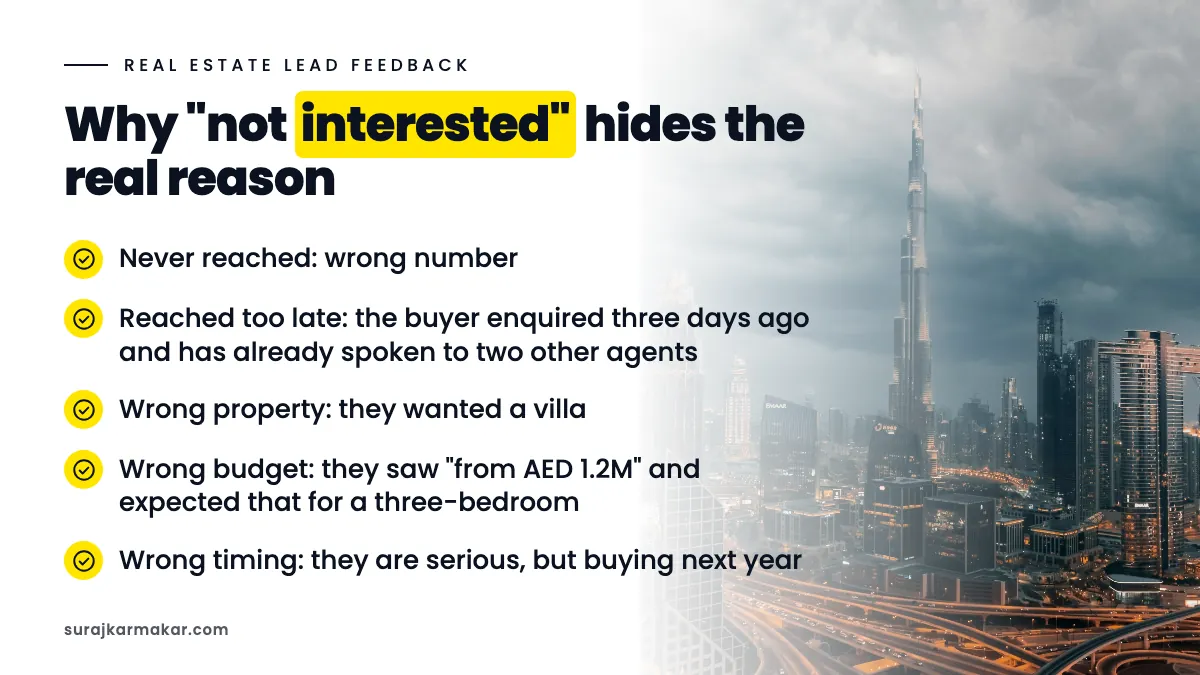
Why "not interested" hides the real reason
A lead marked "not interested" usually falls into one of these groups:
- Never reached: wrong number, switched off, or no answer after one try.
- Reached too late: the buyer enquired three days ago and has already spoken to two other agents.
- Wrong property: they wanted a villa, the campaign was for apartments.
- Wrong budget: they saw "from AED 1.2M" and expected that for a three-bedroom.
- Wrong timing: they are serious, but buying next year.
- Did not remember enquiring: usually a sign of a low-intent lead form.
Each of these needs a different fix. Lumping them together means you fix nothing.
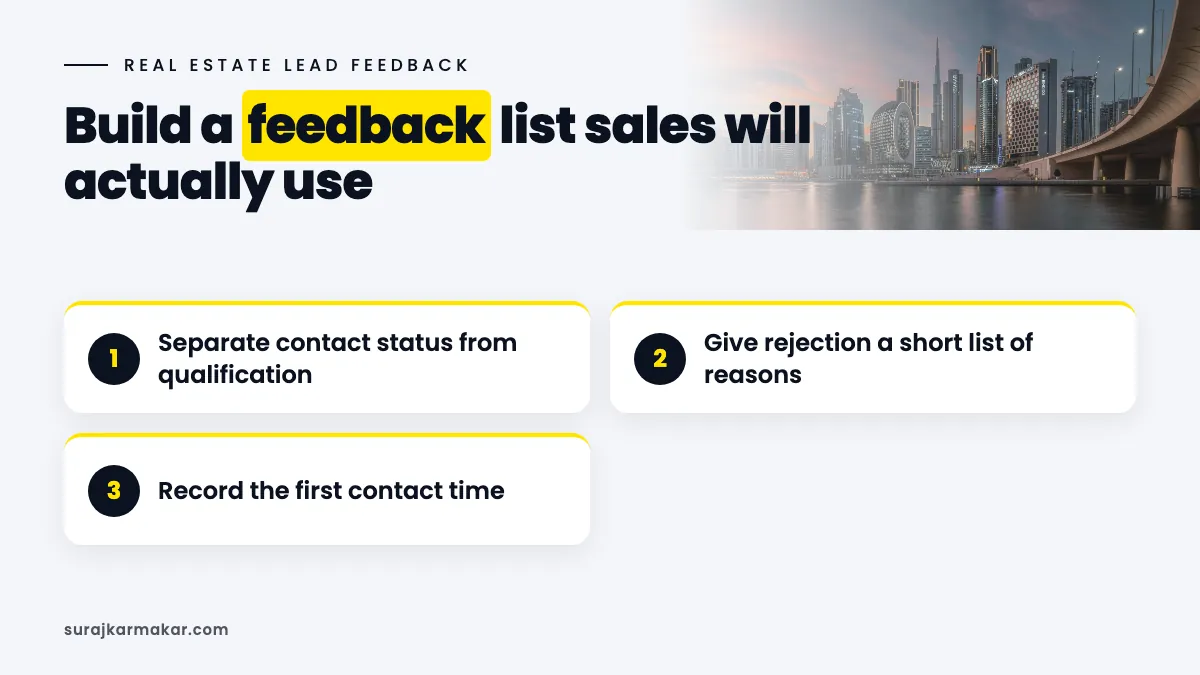
Build a feedback list sales will actually use
Sales teams hate extra admin. If the feedback form takes more than ten seconds, it will not be filled. Keep it short.
1. Separate contact status from qualification
First, ask one question: did we have a real conversation? Use three options: not yet attempted, attempted but not reached, and spoken to. Only leads in the last group can be judged on interest or fit. A lead nobody has spoken to is unknown, not bad.
2. Give rejection a short list of reasons
For leads that were reached but did not progress, use five to seven reasons:
- Budget does not match
- Location or community does not match
- Property type or size does not match
- Buying later (timeline)
- Did not recall enquiring
- Looking for rental, not purchase
- Other, with a short note
3. Record the first contact time
Add a timestamp for the first call or WhatsApp message. Slow response is one of the most common hidden reasons behind "not interested". If the data shows leads called within an hour progress far more often than leads called the next day, the problem is not the campaign.
Turn the patterns into tests
Once you have two or three weeks of clean feedback, the patterns tell you where to look.
Budget mismatch is high: check whether the ad and landing page show a realistic price for the unit type you are promoting.
Location mismatch is high: check whether the ad shows the community clearly, and whether targeting is pulling in people looking elsewhere.
"Did not recall" is high: the lead form is probably too easy. Add one qualifying question or test a landing page.
Not reached is high: look at speed of response and number of attempts before blaming the audience.
Change one thing at a time. If you change the creative, the form and the audience together, you will not know what worked.

Make the weekly review short and fair
Set a 30-minute weekly meeting between marketing and sales. Look at the same group of leads, from the same dates, with the same definitions. Review the reason counts, not individual arguments about one bad lead.
The aim is not to prove who is right. It is to agree on the next test. When sales sees that their feedback actually changes the campaigns, they fill it in more carefully. That is how the loop improves.

What changes when feedback is clear
Teams that fix this usually see three things. Arguments shrink because both sides look at the same numbers. Campaign changes become smaller and more targeted. And cost per qualified lead becomes the number everyone watches, instead of cost per lead.
It also changes the tone of the relationship. When a sales manager can say "38% of rejected leads this week wanted a lower budget", marketing can respond with a specific fix. When the only feedback is "leads are bad", marketing gets defensive and nothing moves.
It does not make every lead good. It makes it obvious which problems belong to marketing and which belong to follow-up. You can read more about that split in why Dubai real estate leads do not convert.
Frequently asked questions
How many rejection reasons should the CRM have?
Five to seven is enough. More than ten and sales will pick the first option or skip it. Add an "other" option with a short note, and review those notes monthly to see if a new reason deserves its own label.
Who should own the feedback process?
Sales managers should own data entry, and marketing should own the weekly analysis. If one person owns both, the other side will not trust the result.
Next step
Clear feedback is the base of every good lead quality decision. Read my approach to real estate lead generation in Dubai, see how to handle CRM rejection reasons, or book a review of your current CRM feedback.
Explore the wider framework: CRM and tracking for Dubai real estate.
What does this look like in your team?
If your team is working through a similar challenge, get in touch to discuss where a focused review could help.
Discuss your real estate campaign